💡 A new era of financial education 💡 Discover the latest release of our Workplace Finance platform
Learn more
💡 A new era of financial education 💡 Discover the latest release of our Workplace Finance platform
30 mins
Feb 10, 2025
Unlock the link between financial wellbeing & mental health. This Mind Over Money report reveals key insights & actionable strategies for employers to
Written By
Jérémy Moreau

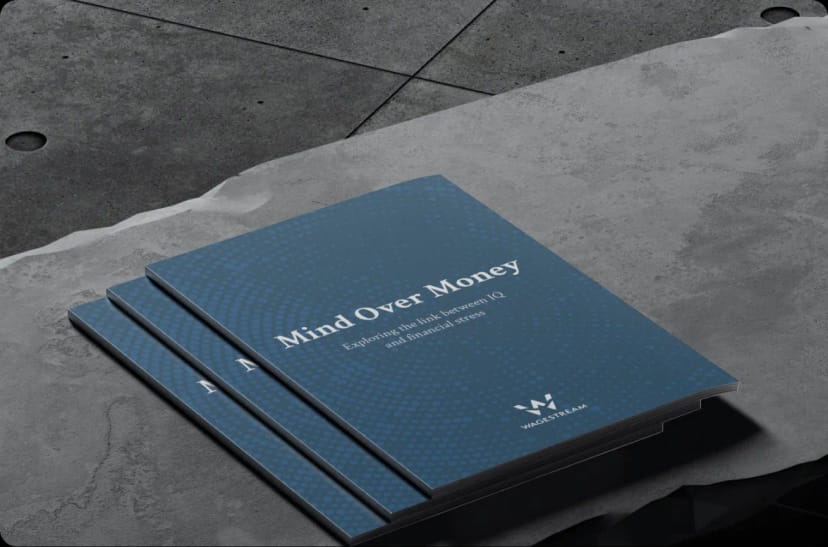
The Mind Over Money Report provides valuable insights into the profound connection between financial wellbeing and mental wellbeing, highlighting the implications of financial stress on colleagues; and actionable strategies for employers. This comprehensive document serves as an essential resource for senior HR professionals seeking to foster a financially resilient and mentally healthy workforce.
A year ago I'd never heard of the concept of 'scarcity mindset'. I first came across the term when analysing some data on the demographic characteristics of Stream members. My goal in this research was to understand how people felt the Stream app impacted their budgeting, spending and overall wellbeing, and whether any insights differed based on age, gender and household role.
My first finding was that the significant majority of app members reported that having access to flexible pay, the potential to be paid more frequently, had resulted in a fundamental change to their spending behaviour. It turned out they now spend less than before.
This research was conducted during January to March 2023's period of high inflation (10.1% overall, but closer to 17% on a household shop). Over these months I remember watching the price of milk rise almost daily; each time I went to the shop to pick up more there was another 5p on the price tag. Four pints of milk in my local supermarket went from £1.10 up to a peak of £1.65, 5p at a time.
So how then could it be that Stream members – typically working in sectors and roles associated with lower pay and variable hours – were somehow spending less at a time when everything around them cost more? As we'll explore in this paper, better financial awareness, better planning and better choice were driving this behaviour change.
Some members, of course, were spending more. But even in this smaller cohort I didn't find what I expected. A handful of people spoke of poor impulse control or rising prices. Many more spoke of having the confidence to spend to meet their needs – and wants – once again because of better financial awareness, better planning and better choice.
It all felt deeply counterintuitive.
I circulated some draft findings and a selection of research quotes with our internal team and a colleague of mine replied with a comment that completely changed my understanding of the data:
"There are multiple points here I find really interesting because they don't come off as negatives to me even though conventional logic would be 'spending more = bad'. The consistent thread here is, this is helping rewire people away from a 'scarcity brain' mindset in a way that's actually positive for their quality of life and relationship with money. I say this as someone with lingering 'scarcity brain' issues due to my background."
Thus began my journey down the 'scarcity' rabbit hole, where I chased research reports and experimental data uncovering this same phenomenon again and again alongside several quite shocking implications. Scarcity can inhibit available IQ and executive functioning, leading to worse decision-making and heightened impulsivity.
Financial scarcity such as consistent worries about money can cost 13 IQ points when tested in lab conditions and 10 IQ points when observed in field conditions. 13 IQ points can move someone from average intelligence to borderline deficient intelligence. Or – if you can alleviate the cognitive cost of scarcity – rising from average intelligence to superior intelligence. And, when you get into the demographics of who is most likely to be impacted by scarcity, there's a compelling argument that we can improve outcomes for women and families by tackling the causes of a 'scarcity mindset'.
I threw out the draft report I'd been writing, jumped back into the data, and looked at the results with a fresh appreciation of what they were telling me.
I hope you'll find it as fascinating as I do.
— Emily Trant, Chief Impact Officer, Stream
Financial and mental wellbeing are two sides of the same coin.
Few would argue that how we feel about money has an impact on how we feel about our lives and ourselves. Money troubles can affect our sleep. Money stress can make us feel less focused at work. Money stigma can even affect our relationships in and out of work. Yet there are profound and measurable ways these two interact, which many of us still don't realise.
- Introduction to a scarcity mindset – what it is and how it can arise
- The demographics of scarcity, and why women are more affected
- Whether a financial support toolkit can help to alleviate a scarcity mindset
- What possible explanations there are for the observed behaviour changes
This paper also explores how a money management toolkit impacts budgeting & spending, alongside feelings of scarcity and stress. We find that research respondents overwhelmingly report spending less money after getting access to the Stream app, despite being able to access their pay more frequently than is set by their employer's fixed pay cycle.
This seemingly counterintuitive result – spending less despite money being more readily available – can potentially be explained by the behavioural economics concept of 'scarcity mindset'. This concept suggests that the cognitive load of managing scarce financial resources impacts available IQ, decision-making ability and impulse control. Scarce resources are therefore further compounded by scarcity mindset and as a result the individual faces much more negative outcomes than could be explained by the former alone.
Better predictability of earnings and the ability to align income with expenses appears to lead to improved decision-making and outcomes, and we hypothesise that this is because it alleviates the cognitive load associated with scarcity mindset. Through our qualitative research we also find that sometimes spending more is associated with better outcomes.
The concept of 'scarcity mindset' is a phenomenon that's studied in psychology and behavioural economics. It suggests that when people are experiencing scarcity their behaviour is affected by the distraction of scarcity itself, and not only their scarce resources. It suggests that when people experience scarcity this distraction impacts their available IQ and their impulse control, and therefore scarcity leads to outcomes that are worse than can be expected based solely on the scarce resources.
A summary journal paper, "FREEING UP INTELLIGENCE", explains the mechanics of scarcity mindset as follows:
"An involuntary preoccupation with an unmet need, such as a shortage of money or time, can capture our attention and impede our ability to focus on other things."
"A fixation on scarcity taxes our cognitive capacity and executive control, thus diminishing intelligence and impulse control, among other things."
"We can free up cognitive bandwidth by converting recurring demands into one-time actions."
Anything can be scarce, but a prevalent and often studied example is money. Researchers argue that financial scarcity can create decision-making patterns that lead to worse financial outcomes. One study in the US demonstrated that when individuals were prompted to think about a stressful financial circumstance – in this case an unexpected and very expensive car repair cost – those with lower household income experienced a deterioration of 13 IQ points. Individuals with higher household income did not experience any deterioration of IQ.
The impact of losing 13 IQ points is significant. It's a bigger drop in IQ than is observed when research subjects are tested after losing a full night's sleep. Most people have at one time or another experienced a night without sleep, and understand how difficult it is to focus the following day. Not only is it difficult to focus, it also makes us feel irritable and can lead to impulsive behaviour. This is the impact of scarcity mindset; a distraction that takes up material cognitive bandwidth, affects decision making, and increases impulsivity, anxiety and poor planning.
Mani et al (2020) put this even more clearly:
"Scarcity mind-sets are exacerbated by the juggling and firefighting pressures inherent to scarcity contexts. A scarcity mind-set is not simply the outcome of scarce resources but a function of the challenges and urgencies involved in managing everyday needs with limited resources. Small factors such as synchronicity between income and spending, predictability, default payments, rainy day funds, and so forth can greatly reduce the persistent demands of managing life under scarcity. Well-timed income and expenses, especially when resources are scarce and there is little slack, demand less attention and effort than when income and expenses are misaligned."
Further research backs this up. Evidence shows that increasing the frequency of paydays reduces cognitive load and improves outcomes including decreased borrowing, increased ability to afford education and training, increased ability to afford childcare, and lower financial stress.
Our own research shows evidence of this in practice. Individuals who use the Stream toolkit – including the flexible pay feature – overwhelmingly report that this leads them to spend less. This suggests that the predictability of being able to understand pay ahead of payday, and the consumption smoothing that's achieved by using flexible pay, work together to reduce the cognitive load of managing scarcity.
Before getting into detailed results, it's worth taking some time to reflect on who is most likely to be impacted by lower and variable pay, and therefore the cognitive bandwidth 'tax' of trying to make ends meet in the midst of uncertainty and low resilience.
The idea of "Scarcity" was introduced by a book of the same name written by Sendhil Mullainathan, an economist at the University of Chicago, and Eldar Shafir, a psychologist at the University of Princeton. In this book, the authors argued that having scarce resources generate a different mindset and psychology, and that having a "scarcity mindset" might trap individuals in poverty. Most of the book focuses on the scarcity mindset of those who are in poverty, or who have fewer financial resources than they perceive they need. However, the scarcity mindset isn't limited to individuals who perceive they do not have enough financial resources: the authors argue that individuals who experience scarcity in some domain – for instance, not having time, or being lonely and not having friends – tend to "tunnel" or think too much about that particular issue, and that this "tunneling" puts a "bandwidth tax" on their thinking about other aspects of their lives, often leading them to make mistakes in choices that could be consequential. The authors argue that while the issue of scarcity is not limited to scarcity of financial resources, the bandwidth tax imposed on those who are financially vulnerable is particularly important because if the financially vulnerable make mistakes these mistakes may be particularly consequential.
Several studies published by these authors and their collaborators at around the same time as the book provided evidence for this hypothesis. In Mani et al (2013) the authors conducted an experiment with American shoppers, in which they asked these shoppers to think about a future financial decision (such as how they would pay to repair their car if it broke down). After thinking about this financial situation, subjects completed a variety of psychological tasks on cognitive performance. The authors showed that subjects who were poor performed worse on these tests after thinking about these financial issues, and that relatively wealthier individuals showed no such effect. They also replicated a similar effect among sugarcane farmers in India. Shah et al (2012) conducted similar experiments showing that this effect extended to the time domain: subjects were asked to do timed tasks, and those with less time were more likely to make mistakes than those with a larger time budget.
Today, many papers have explored the effects of scarcity on behaviors in a variety of domains. While some papers have failed to replicate the finding, other papers (e.g. Duquennois (2022), which shows that poor students struggle more on maths questions that mention issues of money) suggest that the consequences of scarcity might be more widespread. In an important recent paper, economists have also shown that this scarcity might reduce workers' productivity: Kaur et al. (2023) show that large cash infusions increase labor productivity among workers who have more financial concerns.
— Nicholas Swanson and Dr. Luisa Cefalà, University of California, Berkeley
It's important to begin with some context on the people who use Stream. Stream provides financial benefits designed for shift and deskless workers; people who need to go to work, often referred to as frontline workers.
Frontline workers account for over half (56%) the UK's total workforce and are the significant majority of the Stream membership base.
Within the Stream membership base, our members typically:
- Work in sectors such as hospitality, retail, healthcare, social care, logistics, facilities management, cleaning, and security
- Are paid by the hour (70%) and over half (61%) are in part-time work
- Take home just over £1,400 per month; over 80% of Stream members earn less than the national median annual wage of £34,953
- Are women
In our research sample 64% of respondents identified as female, 34% as male, and 2% as non-binary or chose not to disclose.
This is not just a Stream phenomenon. Women and individuals from ethnic minority backgrounds are overrepresented in frontline, part-time, low paid and insecure work.
Women are more likely to experience the conditions that lead to scarcity mindset than men. Globally and in the UK, women are more likely to experience poverty, be financially excluded, have a credit score that is lower than men, be paid less, accumulate less wealth, spend more time caring for children, be financially responsible for children, and be responsible for financial management in their household. It's a heavy burden and comes with a high cost.
This tallies with overall data on the gender split in lower paid work.
According to a report published by the Social Metrics Commission in 2021, 6 in 10 low to middle-income workers in the UK are women despite women representing slightly less than half of the overall workforce. In our sample we had even more women, perhaps driven by the sectors and the types of work where Stream is most commonly made available to employees, such as healthcare, social care, hospitality and retail.
In social care, one of the lowest paid sectors, women account for 81% of all staff. In addition, 48% of care workers are part-time, compared to 32% across all industries and 22% are on zero-hours contracts. The picture is similar in the NHS, where 77% of NHS staff are women.
In retail, 58% of workers are women as are 55% of hospitality workers. Whilst it's true of all sectors, it's especially true that within healthcare, we value expertise and continuity of care. The immense responsibility these employees are tasked with may, unknowingly be undermined by the pressure of scarcity mindset.
Of particular note is the high proportion of part-time workers, which is commonly associated with the need to provide care for children or a family member. Women are more likely to be in part-time work and hold caring responsibilities, which can impact their financial health.
ONS data from 2022 shows that approximately 38% of women in employment worked part-time compared to around 14% of men. In our base we see a much higher proportion of part-time workers.
In our data, women were more than twice as likely as men to report that they are supporting children (38% vs 17%), and seven times more likely to be a single parent (14% vs 2%). They were eight percentage points more likely to be a breadwinner in their household (74% vs 66%), a third more likely to be putting aside savings directly from their pay (32% vs 23%), but five percentage points more likely to report £0 in available savings (36% vs 31%). Single parents fared worse; more than half report £0 in savings (53%) and close to two thirds worry about money frequently (64%).
Women were seven percentage points more likely to experience frequent money worries (56 vs 49%) and half as likely to be confident about meeting their long term financial goals (13% vs 22%). Just 1 in 11 single parents were confident about meeting their long term financial goals (9%).
This is a stark difference in a population who have the common characteristics of being employed in the same sectors and earning similar amounts of pay.
A note on gender data: One percent of respondents chose not to provide their gender. A further one percent of all respondents identified as non-binary, gender fluid or agender. Whilst we’ve listened for their voices and specific experience within this research, the number of respondents is too low to draw any firm conclusions across the data. For this reason, we have avoided commenting on the specific experience of this group.
As well as understanding the demographics of scarcity, we also sought to explore the impact a financial wellbeing toolkit has on those experiencing a scarcity mindset. To determine this, we surveyed just over 4,500 people who use the Stream app, a financial wellbeing app provided to 3 million workers via their employers.
We asked survey respondents to tell us how their spending has changed, and whether they attribute that change to using the Stream app or not. Options were presented using a Likert scale format and participants could report that their spending was either much more, a little more, neither more nor less, a little less or much less than before. For each more or less option, participants also chose whether this change was caused by the Stream app or not. We also gave respondents an option to select 'don't know / prefer not to say', and we drop these responses from our analysis.
The significant majority of research respondents reported that they've changed their spending habits, and they now spend less than before.
Around a third (32%) of respondents report no change to their budgeting or spending. Where this is the case, respondents cite reasons such as using a different method to plan their budgeting and spending, having fixed payments already set up via direct debit, only using the app for the payroll savings feature, and having a very tight budget with no discretionary spending.
The Stream app is an end-to-end financial wellbeing platform that creates behavioural change. It's helpful to know how two of the app's features work, since they are particularly pertinent to the research findings. These features are budgeting (Track) and flexible pay (Stream).
Budgeting (Track)
Employees can track their earnings in real-time and check that shifts are correctly logged by managers before payday. This clear visibility puts employees in control and helps them see if they're on track to earn enough within a given pay period, as well as giving them the information needed to plan and stick to a budget. Employees use this data to make decisions about whether or not they need to take on additional shifts in a pay period, and to adjust their discretionary spending where there is a potential shortfall (or surplus).
This feature is the most heavily used part of the Stream app.
Flexible pay (Stream)
Employees can choose to get paid up to 50% of their earned, but as yet unpaid wages when it suits their wants and needs. This is not a loan or an advance. Employees can only choose to be paid for work they've already completed.
Employees use this tool to smooth the cashflow peaks and troughs that tend to come with hourly pay and to manage the timing of their spending so it aligns with their earnings.
Focusing only on the two thirds who do report an impact on their budgeting and spending:
78% say they spend less than before and 82% directly attribute this change to the Stream app.
22% say they spend more than before and 67% directly attribute this change to the Stream app.
For those who report spending less, they are 8 percentage points more likely to report spending much less (31%) compared to a little less (23%). For those who report spending more, they are 7 percentage points more likely to report spending a little more (11%) compared to a lot more (4%). Individuals were almost 8x more likely to report that they now spend much less instead of much more.
Individuals were almost 8x more likely to report that they now spend much less instead of much more.
Although the spending changes are interesting to observe and indicate that respondents are potentially making better decisions and improving their executive control, they don't give the full picture. This is because sometimes spending more can also lead to better outcomes.
To dig into this, we asked survey respondents to tell us why they spend more, less or the same amount. In their own voices they told us of the impact of better visibility, better control, improved decision-making and much more. We've shared a selection of quotes that are representative of the breadth of responses.
Here, in these member voices, we see just as much evidence as we do in our quantitative data that respondents are making positive changes that lead to better outcomes.
We asked members why they now spend less and have shared a selection of member quotes:
"I know my earnings and I budget accordingly"
"I use the app to save"
"I'm able to control my money better"
"I use the shopping vouchers"
"I can pay bills on time, so no more late penalties"
"I know when my next payday is, so I can plan my spending better"
"I can see how much I have earned and how that compares to my time spent working, this makes me more aware of the value of items and I spend less on unnecessary things as a result of that"
"It helps me to plan better. I spend what I earn, not more"
"Because I can pay bills as and when they come up so I budget better for those things and my pay lasts longer"
"I can stream exactly what I need for bills and groceries"
"I know I can access additional funds if needed therefore don't need to worry about stretching my monthly wage which causes less stress & less panic buying"
"I can access my wages when I need them, therefore, I can gradually buy the things I need rather than spending all my money at once"
"Because I am aware of how much I am earning per shift I am able to budget better"
"Because of the opportunity to pay bills on time without being charged late fees"
"Because instead of taking money out of savings, if I really need some money I can just stream some instead"
"Because it allows me to see my wages beforehand and therefore plan spending better"
"By being able to see my pay and having the option for some of it to be put aside without ever touching my bank account, I have become much better at saving and budgeting"
"I find it less worrying checking the app compared to my bank account"
These comments suggest that the predictability of being able to understand pay ahead of payday, and the consumption smoothing that's achieved by using flexible pay, work together to reduce the cognitive load of managing scarcity.
We asked members why they now spend more and have shared a selection of member quotes:
"Having access to flexible pay makes me more confident, so I can pay bills sooner or make purchases I'm planning"
"With my budget, I know I have safety net, I can buy a little more for my needs without worrying"
"I don't need to wait until payday"
"The fee for flexible pay is an extra expense"
"Knowing I will have that money can sometimes mean I am more relaxed to spend it"
"The ability to stream money gives me the confidence to spend my current money, knowing that I can get more if I need to"
"I use it like a bank overdraft"
"It's more so that it's made me more aware of my spending habits. I spend more with the app because I can access my money. Whereas, if I couldn't access it then I wouldn't be able to spend it."
"Because I feel as though I am less likely to leave myself short of money and can cover bills a bit easier, causing me to spend more on non essential things"
"With the bank shifts that I've worked over the week, Stream gives me a partial of what I earned every Wednesday direct to my bank which is awesome! I don't need to wait and stretch the budget until the next salary day"
"Not having to wait for payday means I've used the stream service to buy things earlier"
"I can see the exact amount I'll be receiving for that month so I can spend a bit more money on myself"
"It's just gives me flexibility I can afford to go out or pay bills earlier"
"Because bills get on top of me and get expensive so I need to use Stream to help"
"The app is giving me predictions on my wages therefore giving me a false sense of security as to how much I am earning. It is also giving me a safety net of being able to access money sooner without normal debt"
"You can take far too much money out, yes there are settings to change this but its too easy to change these settings, understandably self control has to be taken into account but cost of living is too high to be having these options readily available"
Spending less is typically viewed as a positive behaviour change, and spending more a negative behaviour change. This is certainly true in some circumstances, and is reflected in the range of comments.
What might be surprising is that in many cases the act of spending more was viewed as a positive. For example, having the confidence to know that bills will be covered and there is room to spend on non-essentials too.
Despite the research, some still assume that allowing people to choose when they wish to be paid, rather than wait for their employer's fixed payday, will lead to overspending and poor financial outcomes; our research result tells a different story.
Many of the myths about how and why people choose to use flexible pay are unpacked thoroughly in "Unlocking the Pay Cycle", a deep dive into the impact of flexible pay (aka. earned wage access) on those who use it, including how they spend, save, and interact with credit products.
From such research we know that one particular way people spend less when using flexible pay is cost savings associated with liquidity. Some examples include paying bills on time to save on late payment fees, purchasing goods when they're on sale, bulk-buying to get lower prices, and paying down debt more quickly.
Our working hypothesis is that this result – spending less despite greater access to pay – is driven by a combination of improved predictability and better alignment of incomings and outgoings. These two factors are explicitly called out by Mani et al (2020) in her work on scarcity mindset, and align with two most-popular benefits in the Stream platform - budgeting (Track) and flexible pay (Stream).
Visibility of pay as it accrues improves predictability of earnings and allows proactive decisions around both earning and spending choices ahead of payday. Alleviating cashflow peaks and troughs reduces financial stress and research suggests this reduces the IQ impact of 'scarcity mindset', which leads to better decision-making.
Predictability can help to alleviate the negative effects of a scarcity mindset. This comes through clearly in our data.
Individuals who frequently check how their earnings are accruing during the pay period are more likely to report that they spend less money. 9 in 10 people who spend less, check this data at least once per week. Individuals who check this data after every shift they've worked are 7 percentage points more likely to report they spend less (19% vs 12%), whereas individuals who never check this data are 7 percentage points more likely to report they spend more (2% vs 9%).
There are additional positive outcomes that come from high visibility and predictability of earnings. Nearly 1 in 5 respondents (19%) report that they use this data to make pre-payday decisions about whether they've earned enough to meet their expected outgoings, or if they need to work more shifts. Knowing before payday arises that earnings aren't sufficient and having a chance to take action – either by working more or by cutting discretionary spending – gives control back to individuals and reduces financial stress.
Combining predictability with the ability to manage cashflow further alleviates stress.
Respondents who choose flexible pay are a third more likely to report that they check to see if they're on track to earn enough to pay their usual bills vs those who do not use flexible pay (28% vs 21%). They are also slightly more likely to check Track to see if they need to pick up any extra shifts (20% vs 18%).
A quarter of respondents said that if they didn't have the choice to use flexible pay they would need to go without essentials such as food and heating, and just 11% reported that their spending was discretionary and could be stopped if needed.
When looking at individuals who report a change in spending, 73% of people who use flexible pay report spending less than before vs 81% of people who do not use flexible pay.
Including those who say their spending has stayed flat:
- 80% of individuals who use flexible pay spend the same or less
- 94% of individuals who do not use flexible pay spend the same or less
The consistent thread here is that having visibility of earnings paired with having access to earnings is helping rewire people away from a 'scarcity' mindset in a way that's generally positive for their quality of life and relationship with money.
We think there's compelling evidence that particular components of the Stream toolkit play an active role in alleviating a scarcity mindset and improving outcomes for members. However, sceptics may argue that the act of using this toolkit indicates poor decision-making and may be as a result of scarcity mindset. There is always nuance when it comes to human behaviour and there is almost certainly a grain of truth in each of these statements. The job is to figure out which of these statements is more true, by how much, and in which circumstances.
There is a reasonable degree of lab work when it comes to measuring the effect of a scarcity mindset, but not a huge amount of fieldwork. We think this is an exciting area of behavioural economics that's interesting to academic researchers, policy makers and employers.
In order to test these two statements and measure their relative strength, we intend to collaborate with a team of academic researchers to enable a robust and independent field study. At the time of writing, this study is in the early stage of being designed, and we welcome both employers and academic researchers to get in touch to explore a research collaboration.
As this paper is primarily focused on the budgeting and spending behaviours of low to middle-income workers, it draws on a survey sample of individuals who use the Stream app, which is provided via their workplace.
The app gives individuals information about the work they've completed in a pay period and the earnings they've accrued, which is the primary feature that drives financial behaviour change. The app also allows a worker to access a proportion of their already-earned pay—a proportion which is set by themself and their employer – at any point in the pay cycle; the remainder of their pay is received at the end of the pay cycle. The feature is sometimes referred to as 'stream' or 'streaming' by our members, so we have occasionally used this terminology in the paper, too.
To get a baseline understanding, we surveyed just over 4,500 people who use the Stream app, asking them about their budgeting and spending behaviour and mapped this against gender, age, household role, and financial health score.
We designed the question set to understand both positive and negative outcomes and were open to what we might learn. The survey was also structured and set up to mitigate bias and ensure high-quality responses.
- An independent expert reviewed the question set to ensure it was presented in a way that would not introduce bias
- We combined pre-defined survey answers that typically followed a Likert scale format and supplementary free text responses
- Where it wasn't suitable to use a Likert scale we randomised the response order so as to remove any bias related to the ordering of responses
- As much as possible we included the options for individuals to respond with "don't know / prefer not to say", so that we could cut noise out of the survey data
We ran the survey over a two week period in Q1 2023, through the Stream app.
- We offered a prize draw incentive of 10 prizes of £25 gift vouchers
- On average, the survey took just over 15 minutes to complete
- Individuals were prompted to take the survey no more than once
- This prompt occurred while they were actively using the Stream app
- 4,570 individuals fully completed our survey
- Over 35,500 free text responses were recorded, driving a far deeper understanding of the quantitative data
It's worth remembering that the Stream app is designed for a specific group - shift and deskless workers who commonly work in sectors like retail, hospitality, logistics and healthcare. They typically earn less than the national median annual wage of £34,953 and are predominantly on hourly pay. The Stream membership base has more women and more part-time workers than in the general population. Some sectors are also skewed towards younger workers. As such, the findings of this paper are representative of a particular section of the UK workforce rather than the general population.
Additionally, results around spending behaviour are based on self-reported changes which might be subject to individual differences in interpretations. There's also a chance that this self-reported data is subject to one of the following simple heuristics – recency bias and optimism bias.
- Recency bias is a cognitive bias that places greater importance on recent events. For example, if someone recently spent a lower than usual amount they might be more inclined to report this lower number.
- Optimism bias is a cognitive bias that leads people to believe a positive event is more likely to happen or a negative event is less likely to happen. For example, if someone typically spends £750 but rarely spends £500, they might be more inclined to report spending £500 due to optimism bias.
For all these reasons, our insight on the topic of spending should be interpreted with caution.
Finally, this research looks at a point in time behaviour change and does not yet attempt to track longer term outcomes. We don't know if this behaviour change will be consistent, will dampen over time, or will reverse in the longer term, and therefore cannot draw conclusions as to its longer term effect until it's studied further.
Talk to us about the positive impact we can have on your teams and your business.