💡 A new era of financial education 💡 Discover the latest release of our Workplace Finance platform
Learn more
💡 A new era of financial education 💡 Discover the latest release of our Workplace Finance platform
23 mins
Feb 10, 2025
UK cost of living crisis impacting employee wellbeing? Learn actionable strategies for employers to support staff, boost morale & productivity. Discover
Written By
Jérémy Moreau

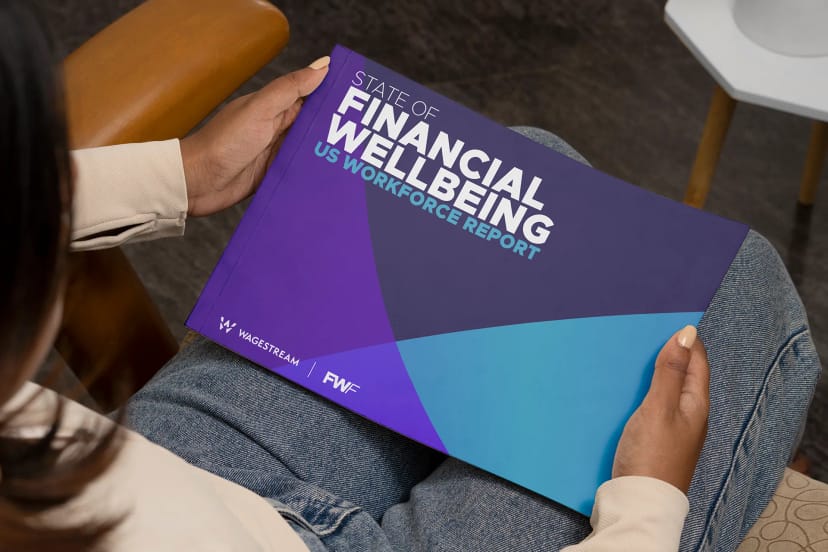
The cost of living crisis in the UK is having a profound effect on the workforce, influencing daily lives, mental health, and overall quality of life. A recent report on this issue sheds light on the growing financial strain colleagues face, its implications for their wellbeing, and the roles employers can play in addressing these challenges.
The State of Financial Wellbeing is a research programme designed to improve the population's financial wellbeing. It pairs data and analysis with expert opinion and lived experiences to paint a clearer picture of what builds financial wellbeing, what blocks it, and how we can work together to make it a reality for everyone.
This report follows the March 2022 release of our flagship UK Workplace Report 2022 and builds on it in two ways. Firstly, it looks at workers' financial wellbeing through the lens of rising costs and, secondly, it examines how employers have responded to the cost of living crisis and what their impact has been on workers' financial wellbeing.
— Jamie Lawrence, Insights Director, Stream
This report is drawn from three datasets: a survey of 2,500 UK employees and 300 UK senior HR professionals conducted in Q2 2022, a survey of 5,000 UK employees and 600 UK senior HR professionals in Q4 2021 and a survey of 2,000 UK members of the public conducted in Q3 2021.
With the Bank of England forecasting that inflation will hit 11% by the end of 2022, workers across the UK are facing shrinking pay packets as the cost of living bites.
This important Stream report confirms the challenges facing employees and employers with over two thirds of UK workers worrying more about money as the cost of living surges.
Wages have stagnated in recent years and, while millions more people may be in employment, the quality and security of the jobs they are in often means they are unable to make ends meet.
The reality is it will be acutely worse for the six million people in the UK who are in severely insecure work, and already face low pay and uncertain hours.
The Work Foundation's UK Insecure Work index makes clear that young workers, women, ethnic minority workers and disabled workers are the groups most likely to be in severely insecure work – with significant impacts for their financial and mental wellbeing, as well as their future career prospects.
While there is a clear role for Government in providing short-term support packages and improving workers' rights in the long-term, employers also have a vital role to support their employees' financial wellbeing during the worst cost of living crisis in living memory.
With low unemployment and the highest level of job vacancies on record, supporting the financial wellbeing of employees is not only the right thing to do, it also makes business sense.
The Work Foundation looks forward to working with Stream, employers, employees and the Government to help improve the UK's financial wellbeing during and beyond this crisis.
— Ben Harrison, Director, The Work Foundation at Lancaster University
Earlier this year, the Money and Pensions Service (MaPS) published delivery plans to take forward the UK Strategy for Financial Wellbeing. Alongside delivering the MoneyHelper service to support people to make the most of their money and pensions, and commissioning free debt advice services in England, MaPS has a statutory duty to coordinate the UK Strategy. We can only do this by working with stakeholders in government, education, financial services, the community and the workplace.
The Strategy sets out, and the delivery plans enable, ambitious agendas for change across five broad financial wellbeing themes: children's financial education; savings; use of credit; debt advice; and planning for and managing in later life. They also include cross-cutting themes on gender, mental health, and workplace.
Our own survey data shows how much work we still need to do in partnership with many others – especially employers – to improve the financial wellbeing of millions of people in the UK. This is placed into even sharper focus by the impact of rises in the cost of living.
The findings in this report on the cost-of-living burden are therefore timely and welcome, as the impact of greater financial pressures on people's mental health grows. It also highlights the different levels of support offered by employers – comparing those with a financial wellbeing plan in place, and those without.
It is important that employers understand that they can signpost their employees to free and confidential support at key moments of need. We recently launched a 'managing money in uncertain times' section on our Money Helper website, to help people manage rising costs. For people in problem debt, we have a debt advice locator tool that allows them to find free and confidential support.
MaPS looks forward to working with Stream, other providers of workplace financial wellbeing, and employers of all sizes and from all sectors as, collectively, we drive forward the outcomes we want to achieve for those most in need through the UK strategy for financial wellbeing.
— Sarah Porretta, Propositions, Insights and External Engagement Director, Money and Pensions Service
Close to all UK employees (96%) have seen their living costs rise and, as a result, 70% now worry more about money.
Over a quarter (28%) now worry daily about money, up from 24% in November 2021. Those worrying once a week or more has jumped from 57% to 72%.
Three quarters (76%) of those worrying more have seen their mental health decline. Unsurprisingly, therefore, one in five (19%) of those who have asked their employer for support in the last three months asked for help with mental health.
In terms of impact, just under half (46%) have experienced stress in the last three months, 36% have struggled to sleep and 18% have had difficulties focusing at work.
Overall, over half (52%) said money was worrying them more than anything else - up from 40% since our last survey in November 2021.
And the biggest financial priority among UK workers has shifted from building emergency savings (28%) to reducing debts (33%), reflecting the increased and sustained financial pressure being felt.
UK employees have taken specific financial actions in response to rising costs: the most common was reducing spending, taken by 70% of those we surveyed.
Over a third (39%) have reduced the amount they save, while 20% have increased their use of credit such as credit cards and overdrafts. February 2022 saw the largest month of credit card borrowing since records began.
Just over a quarter (28%) have taken steps to change providers to reduce bills, while over one in 10 (13%) have asked friends and family for help.
A further one in 10 (11%) have negotiated new rates with suppliers for existing services and 7% have reduced or stopped their pension contributions.
Just one in 20 (6%) have taken no action as a result of the cost of living going up.
Having savings has been insulating: compared to those with no savings, those with over £10,000 in savings were four times more likely to have taken no action.
What actions employees have taken in response to rising costs:
- Reduced my spending: 70%
- Reduced the amount I save: 39%
- Taken steps to switch providers/reduce bills: 28%
- Used my savings to make ends meet: 27%
- Increased use of credit e.g credit cards/overdrafts: 20%
- Asked friends and family for help: 13%
- Negotiated new rates with supplier: 11%
- Stopped/reduced pension contributions: 7%
- I haven't taken any steps: 6%
Life quality has not slipped for those who merely noticed costs were rising. But it has for those who have taken action in response to rising costs.
Taking any action in response to rising costs is associated with an additional 7.8 days of money worry on a monthly basis, compared to those who have not taken action.
All actions were associated with higher frequencies of money worries, apart from negotiating rates with suppliers or switching providers. These actions are perhaps more likely to be discretionary.
Taking any action was also associated with an increase in anxiety felt, apart from switching providers to reduce bills.
Taking action was not associated with a reduction in life satisfaction, with three exceptions: reducing your savings rate, stopping or reducing pension contributions and using savings to make ends meet.
No actions were associated with a reduction in feelings that life was worthwhile, apart from dipping into savings - we'll further explore the impact of taking this action in the next section.
Increase in annual days of worry, based on actions taken in response to rising living costs:
- Used my savings to make ends meet: 50 days
- Asked friends and family for help: 50 days
- Increased use of credit, such as overdrafts or credit cards: 36 days
- Reduced the amount I save: 32 days
- Stopped or reduced pension contributions: 31 days
- Reduced my spending: 24 days
- Negotiated new rates with a supplier: 11 days
- Taken steps to switch providers to reduce bills: 11 days
Dipping into savings is the action associated with the biggest negative impact on life quality.
It was linked to a 10% increase in anxiety felt on the day before participants filled in the survey and an average 8% reduction in life satisfaction.
It was also associated with an average 5% reduction in whether life felt worthwhile and 4.2 extra days of worry per month.
Having less in savings also meant UK employees were more likely to have to take action to stay afloat. Well over a third (41%) of those with £1-£100 in savings have used more credit.
This figure drops to 11% for those with over £15,000 in savings.
Those without savings were 8.4 times more likely to have asked family and friends for help, compared to those with over £10,000 in savings.
And those with £1-£100 in savings were 3.5 times more likely to have used their savings to make ends meet, compared to those with over £10,000 in savings.
On the flipside, those with over £10,000 saved were four times more likely than those without savings to have taken no action in response to the rising costs of living.
Change in wellbeing associated with dipping into savings to meet rising costs:
10% increase in anxiety felt on the day before they responded to our research
50 extra days of worry each year
5% reduction in how worthwhile they feel the things they do in life are
8% reduction in self-reported life satisfaction
Seven in 10 (71%) employers say rising costs have sharpened their focus on the financial wellbeing of their people.
This compares to 87% when asked the same question about the pandemic.
Just under two thirds (61%) say that more employees have requested help in the last three months than in a typical three-month period.
Despite this, employers continue to underestimate how rising costs are damaging the financial wellbeing and mental health of their people.
While over a quarter (28%) of workers now worry about money every day, employers think the figure is 3%.
The sluggish increase from 2% in November 2021 does not reflect the real-world impact of rising costs on the financial wellbeing and mental health of UK employees.
Meanwhile, 35% of employees have less than £500 saved, a figure employers think is 15%.
Why have you not introduced new forms of support to help employees with rising costs?
- We don't think employees want more support: 24%
- Too many other priorities in our organisation: 21%
- Employees haven't asked us for more support: 19%
- No appetite in the business for this: 14%
- We're not sure what support to introduce: 10%
- We already do enough to support our team financially: 9%
- No budget: 3%
In our last State of Financial Wellbeing report released in March 2022, we underscored how the money stigma hamstrings efforts to improve financial wellbeing in the workplace.
Sadly, the issue is not abating and it's important employers are aware the money stigma is likely to be creating a large cohort of 'silent sufferers.'
Over three-quarters (76%) of employees who have suffered issues like stress and worsening mental health in the last few months due to rising costs have not approached their employer for support.
For a third (35%) it's because they don't want people to think they're struggling. A further third (31%) say it's due to shame or embarrassment.
This reticence to talk has real-world impact. A quarter (24%) of organisations don't think employees want more support with money in the next three months and for one in five (19%) of these employers, it's because employees haven't asked.
And yet, over half (52%) of employees say they do want their employer to provide more support with money over the next three months.
Why haven't you told your employer about the issues you've been experiencing?
- I don't want people to think I'm struggling
- I feel ashamed or embarrassed
- No reason in particular
- I wasn't brought up to share my money worries
- I have other people I talk to for advice on money
- I don't trust my employer
- Fear of discrimination
- Fear of dismissal
Eight in 10 (81%) employers say they've introduced new financial support in the last three months.
But just 19% of employees say their employers have introduced new support, pointing to an 'impact gap' despite the increased employer attention.
Employees are also rating their employers more negatively. In November 2021, 52% thought their employer cared about their financial health and 22% did not. These figures now stand at 30% and 35% respectively.
But when employees notice new support, they strongly approve.
They were 5.4 times more likely to say their employer cares about their financial wellbeing if their employer had brought in new support in the last three months, compared to those employees who said their employers had not brought in new forms of support.
What forms of support do employers say they've introduced in the last three months?
- Mental health support: 19%
- Increased hours and/or shifts: 18%
- Employee loans/flexible pensions/health cash plan/pay rises: 17%
- Savings products/salary advances/discounts platforms/cycle-to-work/financial coaching or advice/financial education: 16%
- Earned wage access or flexible pay products/help with childcare/flexible working/private healthcare: 15%
- Season ticket loans: 14%
- Employee assistance programmes (EAPs): 12%
Note: Multiple items in one row does not imply employers introduced all of them - each item attracted the same percentage of respondents
In our last State of Financial Wellbeing report, we found a significant proportion of UK employees did not know if they wanted more financial support from their employer.
This group - the 'on the fence' cohort - are a huge opportunity for employers and may be being missed from existing engagement efforts. This can help explain low take up of support.
In this survey, we identified the same issue and found evidence it may be getting worse. Over a third (34%) are now not sure if they want more help from their employer over the next three months, from 28% in November 2021.
Well over half (57%) said their employer could not help with the cost of living crisis, with the largest percentage of these (46%) saying it's because it's not their job to help.
At a time when support is needed most, employees are struggling to make the connection that their employer is often best placed to support them. The isolating effects of increased financial worry may be partly responsible for the effect we're seeing here.
What's the main reason, if any, you don't think your employer can help with the cost-of-living crisis?
- It's not their job to help: 46%
- There isn't any main reason: 18%
- They don't care enough: 12%
- I don't know how to ask for their support: 7%
- They're too busy doing other things: 6%
- It's too much trouble: 4%
- They don't know what I need: 4%
- Other: 3%
There's a disconnect between what employers say they're doing and what employees say they're receiving.
Well over three-quarters (80%) of employers say they've introduced new financial support in the last three months, but only 19% of employees agree.
Yet over half (52%) of employees want their employer to provide more support.
Implementing new support is always half the battle: telling staff about it is the other half. But it's essential to get right, otherwise your investment - and the impact - underperform.
When communicating new initiatives, organisations face two key challenges. Firstly, most channels and messages appeal to a fraction of the employee base. Secondly, most people have to see something multiple times before they start paying attention to it. Many initiatives fail because employers do not realise how relentless they must be in driving the message and momentum forwards.
Channel is key. Email is easy because it's scalable, but scale is also its main disadvantage - it's easy to ignore. And there are significant cohorts that may have no or intermittent access to email, particularly those who do not work in offices. Those who work part-time may receive emails at different times and therefore won't be able to join spontaneous group conversations which often turn emails into action.
Look at all the channels you have for communicating internally and map them against your employee base. Each channel should be used multiple times and various messaging tried. Measurement is important. The easiest way to do this is to stagger communications across variables like geography and shift patterns so that uptake can be assessed after communications have gone out. Breaking communications down into tranches is the only way to properly measure what's working and what's not. It's also important to prioritise face-to-face communication (particularly for hard-to-reach cohorts) - in the hybrid working world it's easy to think everything can be done digitally, but there's nothing like face-to-face engagement to explain the benefits of something to an employee.
Most communication from employers about initiatives is received when employees have their minds on other things, so there's a gap that must be overcome before employees start turning their attention to the initiative at hand.
The best communications hook into things like current events and popular culture to grab attention and help raise awareness as quickly as possible. At the basic level, if you're going to talk about a financial wellbeing initiative, do it when people have money on the mind - new parents will always be open to a conversation, for example.
Social events are good places to deliver key messages about initiatives because people are grouped together and open. It's not a work occasion, which means the message is parsed through a different lens. Overall, this point is about accessibility - translating products or services you provide into real-world opportunities for employees.
We made this point in our March 2022 State of Financial Wellbeing: The UK Workplace Report, but it's a timeless point. Top-down communication can be optimised through some of the advice above, but ultimately peer-to-peer support with money is the most effective as the money stigma - at least as of 2022 - makes it less likely that employees will talk openly with their employer about money.
Money champions are not there to advise employees but to increase the chances of a conversation happening, to serve as signposters and spokespeople for services that employees may not know about and to act as local, accessible points of contact between employees and the organisation. Your money champion network should be open, diverse and trained to act as signposters - confidence is key in this role.
The negative impact of the cost of living crisis is profound but stigma means employees are still reticent to open up about it at work.
Although it's not gone, the mental health stigma is weaker than it used to be and we can learn lessons on the best ways to tackle money stigma.
There's been no silver bullet: sharing accessible stories, increasing support and raising awareness have chipped away at it over time.
Money troubles are isolating and unfortunately society is prone to black-and-white thinking on 'being good with money' versus 'being bad with money.' Just like mental health exists on a spectrum and shifts over time, so do financial wellbeing and financial skills. Real, human stories that turn money from something abstract into a journey we're all on are important to normalise the ever-changing relationship we have with money.
Using polarising language like 'bad with money' reinforces the idea that people have a non-changeable relationship with money and that they should be defined by their current financial situation. We've made progress in mental health, for example because it's more understood that referring to things as 'nuts' or 'insane' reinforces stereotypes and makes it less likely for people to tell their own story. We now need to do the same for money.
When people don't feel safe, they don't share. Over a quarter of UK employees (26%) do not tell their employer about their money struggles through lack of trust, fear of dismissal or fear of discrimination. Money champions drawn from the workforce can help create safe spaces, as people are more likely to talk to colleagues than along formal structures within the organisation, such as HR or line managers.
Evidence continues to mount not only that savings are fundamental to financial wellbeing, but that being forced to use savings to make ends meet is correlated with worsening life quality.
With this in mind, it's hard to justify a financial wellbeing strategy that does not empower employees to become better savers - and it's important that employers get this right.
Most people have a generalised understanding of why it's important to save, although they may not understand the fundamental and timeless link between savings and long-term financial wellbeing. Generally speaking, you don't need to convince people of why it's important to save. You need to encourage them to find the reason why they should save.
This is about specific motivation. Saving must attract psychological benefits if it's to be prioritised. Help people find their specific motivation - maybe it's holidays with the kids, or clearing debts, or being able to move to a more suitable property. Sharing stories of how saving has helped people achieve their aims can be powerful here, as there are a finite number of motivations and it's about finding the one matched to the individual.
The other important thing is ability. Even with crystallised specific motivation to save, it can still be difficult to save. This can be driven by various things - a lack of products that allow micro-savings, for example, often stops people from getting started, particularly those that have variable income every month and need to quickly reduce their savings rate if their income drops or expenses soar. It's important to feel confident in knowing the amount you can save per month and, therefore, the ability to save is linked to the ability to budget.
Research points to a 27% increase in performance when employees are properly incentivised. Considering the impact of savings on mental health and life quality there is a strong business case to be made for incentivising employees to save and improve their long-term financial wellbeing.
How can incentives work when it comes to savings? Here are some examples:
- A monthly draw where a small number of savers get that month's savings doubled
- Those who are still saving after a year get their savings topped up by 5%
- A free lunch for everyone who signs up to a savings pledge
- A high street voucher for saving every month for six months
We advise not turning savings into a competition, as those who are able to save more are likely to 'win' and it may put off those who can't save as much.
Savings goals are highly context-dependent and there's nothing more dispiriting than a goal that is out-of-reach. It's very hard to set goals for multiple people, especially with something like money which is so individual.
In the early stages of saving, it's all about building behaviours for the long-term and making savings a habit. The amount is less important. It's similar to starting to exercise if you've not done it in a long time. That's why products that allow people to flex their savings every month to suit their income and expenses are most suited to building the right behaviours, because they still work when times are tight.
In addition, it's important to weed out some of the common myths around saving, such as that it's not a good idea to save if you have debts (not always true) or that dipping into savings for a reason unrelated to the original motivation to save is very destructive. Research from Nest Insight suggests even if savings are used occasionally, the general trend over time is still upward - which is the whole point of saving.
To date, the State of Financial Wellbeing report series has been drawn from the following datasets:
- Stream CoL Employee Research Project 2022 – 2,500 UK employees
- Stream CoL Employer Research Project 2022 – 300 UK employers
- Stream UK Employee Research Project 2021 – 5,000 UK employees
- Stream UK Employer Research Project 2021 – 600 UK employers
- Stream UK Public Research Project 2021 – 2,000 UK consumers
- Stream UK Personal Interviews 2022 – 18 UK employees
Stream would like to thank the following partners for their contributions to this report:
- CogCo
- Money & Pensions Service
- Work Foundation
Stream is the financial wellbeing app founded with charities, designed for frontline workers and built around pay. Offered through caring employers like Bupa, Halfords, Pizza Express, Co-op and the NHS, it makes work more inclusive, fair and rewarding for two million people - by giving them access to fair financial services built around flexible pay.
Stream is driven by a social charter: every service it provides must measurably improve financial wellbeing. Over 70% of people using Stream feel more in control of their money, leading to a happier, healthier, more productive workforce.
Talk to us about the positive impact we can have on your teams and your business.