💡 A new era of financial education 💡 Discover the latest release of our Workplace Finance platform
Learn more
💡 A new era of financial education 💡 Discover the latest release of our Workplace Finance platform
43 mins
Feb 10, 2025
Understand the financial challenges facing UK frontline workers, especially ethnic minorities. This guide offers actionable DEI strategies and inclusive
Written By
Jérémy Moreau

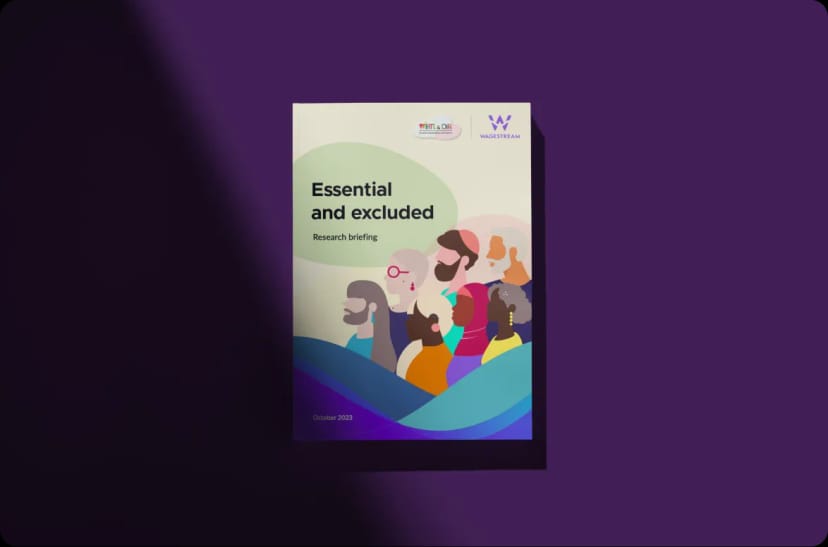
The "Essential and Excluded" report aims to shed light on the financial challenges faced by the UK’s frontline workforce, particularly ethnic minority workers, and provides actionable recommendations for employers to build inclusive workplace policies. The findings advocate for diversity, equity, and inclusion (DEI) strategies that empower employees and create financial resilience through accessible benefits and robust support systems.
Inclusivity within the workplace can take many forms, some more visible than others. Less prominent than other strategic initiatives to create a more equitable workplace, highlighting financial inclusion has become increasingly more relevant since the cost-of-living crisis and the Covid pandemic. This report is produced in collaboration with Stream – a financial wellbeing platform – and is based on a survey undertaken by over 11,000 employees to establish their experiences on work and pay, financial resilience and financial inclusion. The research focussed on how experiences differ according to gender, ethnicity and age, with the aim of creating greater understanding for employers about their employees' financial health and ways in which they can help them to improve it.
Defined as having access to useful and affordable products and services as part of an overall household budgeting capability, financial inclusion allows people to find ways to better manage day-to-day transactions and expenses, and reduce the risk of debt. As a result of societal, cultural and economic constructs, employees in the low to moderate income range can sometimes fall into the reverse – financial exclusion. Organisations wanting to provide support to their workers to avoid financial exclusion can put measures into place which create a release valve, an easing of financial pressure. In turn, employees can make sustainable life changes which ultimately benefit the individual and the organisation for whom they work with improved recruitment and retention levels, employee engagement and productivity rates.
There are demographic groups which are more likely to be affected by financial exclusion, and this report shows that the key predictor is those with lower pay and variable incomes. This is more-often-than-not – women, and in particular from an intersectional level – women from ethnic minority groups. The hospitality, travel, leisure and retail sectors have high levels of irregular and variable work patterns, shift work and seasonal changes all of which can impact an employee's financial security. The results and employee feedback within this report provide the base from which organisations can look at their employees through a financial inclusion lens and take positive action to improve their wellbeing.
I would like to thank Emily Trant and the Stream team for driving forwards this research project and highlighting the importance of financial inclusion as a key component of the wider diversity agenda.
— Tea Colaianni, Founder and Chair, WiHTL & Diversity in Retail
At least 1 in 7 UK adults are financially excluded—around 14% of all UK adults. Stream research from 2023 suggests that this figure may be more than twice as high in particular sectors that employ large numbers of frontline workers, such as retail and hospitality.
So what does a better reality look like, for excluded workers?
Financial inclusion means that individuals have access to useful and affordable financial products and services that meet their needs. This is particularly important for individuals whose financial resilience is low – for example driven by low or unpredictable income, lack of savings or both. In these circumstances access to useful and affordable financial services and products can be a lifeline to help individuals maintain smooth spending and essential consumption across peaks and troughs in income.
Employers have a role to play, as income providers, and are beginning to realise this is not a niche issue. Financial exclusion is often a hidden or unknown facet of inequality that can impact the overall employee experience of work and pay – but there are opportunities for employers to take positive action. For example, variable pay is a driver of financial exclusion. Setting steady and sufficient hours for all workers could be a formidable component of an employer's equality, diversity and inclusion strategy.
In this research we explore the topic of financial exclusion, including what it means to be excluded, how this differs based on gender and ethnicity and how employers can support their colleagues' financial wellbeing.
We've analysed data from over 11,000 survey respondents, with the majority working hospitality and leisure (33.5%), retail (27.8%), healthcare (29.6%), or support services (1.9%). Our data sample reflects the general demographic makeup of hourly and shift based workers in the UK; they are predominantly women and many are in part-time work. Ethnic minorities are proportionately represented in our data.
Within our dataset of similar workers, we find that inequality still persists. Respondents from ethnic minority backgrounds are subject to more variable work hours, are more likely to be financially excluded, and are more likely to use subprime credit products. Subprime credit offerings are tailored for individuals who possess either a weak credit history or none whatsoever, and as a result, these offerings feature higher interest rates to make up for the increased risk associated with these borrowers.
1. Shaky Foundations: Volatile working hours create shaky financial foundations, and ethnic minorities are more likely to experience volatile hours than their white peers.
2. Missing Bills: Women from ethnic minority backgrounds are more likely to struggle to pay their usual household bills compared to their white peers.
3. Missing Out: Individuals from ethnic minority backgrounds are missing out – they are half as likely to receive state support compared to their white peers with similar income.
4. The Savings Gap: Ethnic minority households are more likely to lack adequate savings, and are depleting their savings to cope with income volatility.
5. Locked Out, Or Locked In: Individuals from ethnic minority backgrounds are more likely to use subprime and non-traditional credit products and are more likely to be financially excluded compared to their white peers.
Across all of these findings we explore the intersectional experience of gender and ethnicity.
"This report shines a light on some of the gaps that exist in financial wellbeing among women and ethnic minorities. Both groups are more likely to experience financial exclusion, volatility in their working hours and subprime credit products, so they remain at risk of lower financial wellbeing. For as long as this is the case, there will be more work for us all to do. Evidence like this is important because it helps us add to our understanding, direct our resources and make progress towards helping everyone be more financially secure."
— Roxana Prisacaru, Evaluation Manager, Money and Pensions Service
Volatile working hours create shaky financial foundations, and ethnic minorities are more likely to experience volatile hours than their white peers.
Over 4 in 10 people in our dataset report that their working hours change a lot. Our research shows that people from ethnic minority backgrounds are almost a fifth more likely to experience volatile hours compared to their white peers.
The number one reason for volatile hours, by a significant margin, is the employer: "Whether I work more or less depends on my employer's needs and availability of shifts"
Availability and/or family schedule is the only area of volatility where gender plays a significant role.
26.4% of women report availability and/or family schedule as a factor contributing to volatile working hours, compared to less than a fifth (18.2%) of men.
Volatile hours, and therefore volatile pay, creates shaky foundations for financial security. Research from the Aspen Institute in the US finds that income volatility disrupts important household consumption, leads to late payment of bills, increases the risk of food insecurity, and can lead to utility disruptions and housing instability.
Unpredictable income also means that individuals end up paying more for certain essential services and therefore are less able to put money aside into savings. This is also linked with a higher risk of falling into problem debt, and a higher need for credit products to smooth out peaks and troughs in income while keeping consumption steady.
In this context, our finding that ethnic minorities are more likely to experience volatility in their working hours makes it an urgent priority for employers to consider the implications of their policies related to minimum contracted hours, shift notice periods and shift cancellation – and how those policies connect to their diversity, equity and inclusion efforts.
- White: 38.0% report hours change a lot
- Black, African, Caribbean or Black British: higher volatility
- Asian or Asian British: higher volatility
- Mixed or multiple ethnic groups: higher volatility
- All ethnic minorities: 44.9% report hours change a lot
White respondents:
- Employer-driven: highest factor
- Personal choice: lower factor
- Availability or family schedule: 8.4%
- Health needs: lowest factor
Ethnic minority respondents:
- Employer-driven: slightly higher than white peers
- Personal choice: 5.9%
- Availability or family schedule: 12.3%
- Health needs: similar to white peers
Women from ethnic minority backgrounds are more likely to struggle to pay their usual household bills compared to their white peers.
The impact of shaky financial foundations is clear. Almost two thirds of respondents from white backgrounds can usually or always pay their bills, vs just over half of respondents from ethnic minority backgrounds. This is particularly acute for respondents from black, African, Caribbean or black British backgrounds; almost a fifth usually cannot pay their bills and less than half can do so reliably.
Black women are twice as likely as white men to report they cannot pay their usual bills.
This is certainly caused in part by volatile hours. Unpredictable income makes it hard to plan for and pay even predictable bills. Access to short term financial support also plays a role. Receiving financial support is positively correlated with being able to pay bills on time. Amongst those who can regularly pay their bills, over 4 in 10 report that they have another source of income.
- Women, white: 12.2%
- Women, all ethnic minorities: 15.5%
- Women, black, African, Caribbean or black British: 20.1%
- Women, Asian or Asian British: 11.2%
- Men, white: 9.7%
- Men, all ethnic minorities: 14.3%
- Men, black, African, Caribbean or black British: 16.7%
- Men, Asian or Asian British: 11.2%
Both women and men from ethnic minority backgrounds are more likely to report they cannot pay their usual bills, and this is particularly notable for those from black, African, Caribbean or black British backgrounds.
Individuals from ethnic minority backgrounds are missing out – they are half as likely to receive state support compared to their white peers with similar income.
Recent research from Policy in Practice estimates that around £19bn in state support goes unclaimed each year. One of the biggest reasons why people miss out on state support is a simple lack of awareness. They don't know or don't think they're entitled to state support.
15.2% of participants from white backgrounds report that they receive some sort of state benefit such as universal credit. Only 7.6% of respondents from ethnic minority backgrounds receive this support – exactly half the proportion of white respondents.
Lack of access to state support might explain why individuals from ethnic minority backgrounds are more likely to struggle to pay their regular bills.
Employers can address this gap in access through targeted communication to employees to raise awareness and by providing support to help individuals who struggle with the application process.
"Families working in flexible jobs can find it harder to budget and are more likely to struggle financially. This can affect their physical and mental health and their performance at work. Policy in Practice is working with Stream and others to show people how a change in their earnings will affect their take home pay, whilst helping them to access £19 billion of additional support that goes unclaimed each year."
— Deven Ghelani, Director and Founder, Policy in Practice
Income from a partner:
- Women, white: 21.5%
- Women, ethnic minority: 14.5%
- Men, white: 13.5%
- Men, ethnic minority: 11%
State benefits:
- Women, white: 17%
- Women, ethnic minority: 9%
- Men, white: 9%
- Men, ethnic minority: 6%
Women are more likely than men to report receiving additional income. Almost twice as many women as men receive some form of state benefit such as Universal Credit, and they are 59% more likely to say they receive income from a partner.
Ethnic minority households are more likely to lack adequate savings, and are depleting their savings to cope with income volatility.
More than 9 in 10 households in our dataset are falling short of UK government recommended savings levels, leaving them vulnerable to common financial shocks such as time off work for illness or injury, losing their job or another source of income, fixing or replacing a major appliance, an increase in rent or mortgage payments, or large winter fuel bills.
Current picture: Nationally representative data from Money and Pensions Service suggests that 17% of households have £0 saved. Our data: Twice as many respondents (35.9%) report £0 savings.
The bare minimum: Research from StepChange found that if a household has £1,000 in savings they are half as likely to experience problem debt. Our data: Only a fifth (22.0%) of respondents had household savings of £1,000 or more.
Recommended minimum: The government recommends households should have at least three months of essential outgoings saved (£5,475 to £8,448). Our data: Fewer than 1 in 10 households (9.2%) report £5,000 or more in savings.
Around 1 in 10 white households meet the UK government recommended minimum savings levels, but this drops to just 1 in 14 for ethnic minority households. Around a third of ethnic minority households have accumulated modest savings between £250 to £1,000 but they are depleting their savings to pay for their essentials and to cope with volatile work hours.
32.4% of individuals from ethnic minority backgrounds report that they use their savings to pay for everyday essentials, compared to less than a fifth (17.2%) of individuals from white backgrounds. Ethnic minorities are almost twice as likely as their white peers to be depleting savings to pay for the cost of living.
Using savings to pay for everyday essentials has a major impact on financial stress; it adds an extra 50 days of money worries per year. The burden of this stress is being shouldered disproportionately by ethnic minority households.
Individuals from ethnic minority backgrounds are more likely to use subprime and non-traditional credit products and are more likely to be financially excluded compared to their white peers.
The latest research estimates that 1 in 7 UK adults are financially excluded—around 14% of all UK adults. Stream research from 2023 suggests that this figure may be more than twice as high in particular sectors such as retail, hospitality, healthcare and support services.
Financial inclusion means that individuals have access to useful and affordable financial products and services that meet their needs.
Financial inclusion is particularly important for individuals whose financial resilience is low – for example driven by low or unpredictable income, lack of savings or both. In these circumstances access to useful and affordable financial services and products can be a lifeline to help individuals maintain smooth spending and essential consumption across peaks and troughs in income.
The drivers of financial exclusion disproportionately impact women from all ethnic backgrounds and men from ethnic minority backgrounds. For example, low and variable income is a predictor of financial exclusion and women from all ethnic backgrounds and men from ethnic minority backgrounds do the majority of the low paid work in the UK.
Low pay overall is an indicator of financial exclusion and dramatically more women than men are in lower paid work.
We find only minimal differences in how men and women experience financial exclusion in this data set, but it's important to remember that low pay overall is an indicator of financial exclusion and dramatically more women than men are in lower paid work.
Across the board we saw high levels of discomfort with credit products overall. This points to a structural design problem, where financial products are not being created to match the needs and circumstances of the workers in our dataset. A large part of the financial exclusion we observed was driven by self-exclusion on the basis of fear, poor past experience and lack of confidence.
Thin credit file or no credit file impacts individuals who either have no credit footprint, or not enough data for mainstream lenders to make a credit assessment. Examples include:
- Recently immigrated
- Recently separated from a partner, where their partner previously handled all their finances (statistically more likely to impact women, and particularly women from ethnic minority backgrounds)
- New to the workforce and lack formal financial backgrounds through difficult personal circumstances
- Ex-armed forces personnel, particularly those posted abroad or at sea
Distressed credit file impacts individuals with prior experience with financial difficulties. Examples include:
- Recovering from addiction
- Struggled with or are currently experiencing mental health difficulties
- Living in impoverished areas, where their credit file is impacted by home address
Lower-income households are more likely to have one or more of the following characteristics:
- Women-led, single parent households
- One or more individuals have a disability
- Residents from an ethnic minority background
1. Savings: Around a third (32.4%) of ethnic minority respondents use savings to pay for everyday essentials, nearly twice the rate as white respondents (17.2%).
2. Borrowing from friends or family: Close to 4 in 10 of all respondents borrow money from friends or family, much higher than the national benchmark of around 1 in 10. Usage is slightly higher for ethnic minority respondents (39.3%) compared to white respondents (37.1%). Women from all ethnic backgrounds and ethnic minority men are the most likely to use this form of informal borrowing (38% - 39%) compared to around a third of white men (35.2%).
3. Borrowing from an individual (not friends or family): People from ethnic minority backgrounds are more than twice as likely to report borrowing from someone who is neither friends nor family at 7.9% compared to 3.8% of people from a white background.
4. Subprime credit products: People from ethnic minority backgrounds consistently reported higher usage of payday loans, rent-to-own and pawn shops compared to people from white backgrounds. These products are also more likely to be used by men than women.
5. Catalogues: White respondents are twice as likely to use catalogues (16.7% vs 8.4%) compared to ethnic minority respondents. Over one in five white women (20.3%) use catalogues compared to around one in ten white men (10.4%).
6. Prime credit products: Within our dataset individuals were much less likely to use either credit cards or overdrafts than UK norms; only 30.9% use an overdraft (vs 50% nationally), and just 44.3% use a credit card (vs 70% nationally). White respondents are marginally more likely to use a prime credit product (58.6%) compared to ethnic minority respondents (57.0%).
For overdrafts, nearly a fifth of respondents (19.6%) said that this option is not available to them, and a further 1 in 10 (10.4%) felt it probably wouldn't be available if they applied. In total almost a third (30.0%) knew or believed that they would be declined if they applied.
For credit cards, close to 1 in 7 (14.9%) of respondents said this option is not available to them and a further 1 in 7 (14.1%) believed they would be declined if they applied. In total almost a third (29.0%) know or believe they would be declined if they applied. In addition, 1 in 13 (7.7%) have had a bad experience with credit cards in the past and so have self-excluded.
Key differences by ethnicity:
- Respondents from ethnic minority backgrounds were over 8 percentage points more likely to self-exclude from overdrafts, with the most significant reason being fear of getting into a debt trap. 39.1% had self-excluded, compared to 31.4% from white backgrounds.
- Respondents from ethnic minority backgrounds were just over 4 percentage points more likely to state that credit cards were not available to them (32.6% vs 28.4%), and the biggest gap here came from respondents who were certain they would not be able to get a credit card (20.1% vs 13.9%).
- Respondents from ethnic minority backgrounds are 5 percentage points less likely to use an overdraft (26.7% use one vs 31.9% from white backgrounds).
All of this creates a doubling down of financial exclusion for ethnic minority workers in the UK. Individuals from ethnic minority backgrounds are more likely to be in lower paid work than individuals from white backgrounds. And then when looking at the experience of financial exclusion for people earning low to moderate incomes, individuals from ethnic minority backgrounds are more likely to be excluded from accessing financial products.
In response to our findings, we make four key recommendations for employers:
1. Aim to meet the standard for living hours, as provided by the Living Wage Foundation.
The Living Hours standard calls on employers to provide the right to:
- Decent notice period for shifts: of at least 4 weeks' notice, with guaranteed payment if shifts are cancelled within this notice period
- The right to a contract that reflects accurate hours worked
- A guaranteed minimum of 16 hours a week (unless the worker requests otherwise)
2. Provide support for your workforce to discover and apply for state assistance they're entitled to receive.
There are several high quality calculators available that help people identify the full range of benefits and discounts that are available. This should be supported by regular communication about the support that's available, and case studies highlighting the impact of getting this right.
3. Implement a payroll savings programme and ideally structure it on an opt-out basis so that employees build up savings by default.
Access to an appropriate savings product is an important component of financial inclusion. There's a strong evidence base that payroll autosave is a highly effective way to get individuals on low and variable income to create a savings habit and start building a savings buffer. Recent research from Nest Insight shows that savings participation can reach as high as 71% of a workforce with this approach.
"We now have really strong evidence that opt-out approaches to workplace savings powerfully support many more people to save, including those who may have been excluded from or struggled with saving previously."
— Jo Phillips, Director of Research and Innovation, Nest Insight
4. Review your workplace policies and benefits through the lens of DE&I and prioritise providing financial security benefits that are useful and accessible for the whole workforce.
To do this well, plan to include your DE&I leaders, committees and working groups in assessing your policies and benefits. This is particularly important for any policies or benefits that connect to financial inclusion, financial resilience or financial wellbeing.
This section gives a detailed overview of the gender and ethnic breakdown of the UK's frontline workforce – of which there has been limited research to date. It's based on a proportionally representative sample of 11,117 individuals across industries who use the Stream app, and completed an in-app survey in summer 2023.
The typical Stream member works in hospitality, retail, leisure, healthcare or support services. Most (70%) are paid by the hour and over half (61%) are in part-time work.
Our respondents are representative of the demographic makeup of hourly and shift based workers in the UK.
- 60.6% identified as women
- 37.5% identified as men
- The remainder were non-binary, gender fluid, agender, or chose not to say
Most come from a white ethnic background (80.8%), around a fifth (18.0%) come from an ethnic minority background. This is representative of the UK population (2021 census: 81.7% white, 18.3% ethnic minority).
Research from the Work Foundation shows that our sample reflects the general demographic makeup of hourly and shift based workers in the UK. Their data shows that white women and ethnic minority men and women are most likely to be in forms of insecure work, including lower pay and variable hours.
Just 44.5% of respondents from an Asian or Asian British background are women, making this the only group in the dataset with more men than women.
- 36.0% were age 29 or younger (20.2% were age 18-24, the largest age group)
- 45.0% were between 30-49
- 18.9% were 50+
Women and younger workers are the majority powering the frontline workforce in the UK.
Our respondents were around 13 percentage points more likely to be 24 or younger, and 14 percentage points less likely to be 50 or older than ONS data on all UK workers.
Key observations:
- Respondents from ethnic minority backgrounds were more likely to be younger or middle of the age range, and respondents from white backgrounds were twice as likely to be older
- Women represent just half of all respondents aged 29 or younger and three quarters of respondents aged 50 or older, despite making up 61% of the response base
- Proportionally more women from ethnic minority backgrounds are younger or middle aged workers compared to women from white backgrounds
The people in our dataset experience substantial volatility when it comes to their working hours, and therefore their pay. Over 4 in 10 people report that their working hours change a lot.
Our research shows that people from ethnic minority backgrounds are almost a fifth more likely to experience volatile hours compared to their white peers. This is a particularly important point. In our research we are comparing the experience of workers who have similar jobs and pay, and yet inequality is still present.
Sara Davies, Senior Research Fellow at the University of Bristol, explains: "[Some] bills are cheaper if you pay by direct debit. But if a household's income fluctuates due to insecure work, then paying when you get the bill is the financially responsible, but more expensive, method."
In our dataset, white men report earning the most take home pay closely followed by ethnic minority men, ethnic minority women and finally white women. This reflects monthly take home pay rather than the hourly rate of pay, and so this is influenced by how many hours individuals in each group are able or choosing to work.
Bottom two pay bands (Less than £500, £500 to £999):
- White women: 31.2%
- Ethnic minority women: 30.2%
- White men: 23.1%
- Ethnic minority men: 27.8%
This aligns with findings from the Work Foundation that women from all backgrounds and men from ethnic minority backgrounds are more likely to experience severely insecure work.
When we look at the distribution of pay levels, individuals from ethnic minority backgrounds are the most likely to report earnings at or above the UK's median wage. Close to 1 in 5 (19.8%) individuals from ethnic minority backgrounds report earnings at or above the national median wage, vs around 1 in 7 (14.5%) individuals from white backgrounds.
Over a fifth (20.7%) of women from ethnic minority backgrounds report that they earn at or above the national median wage, a higher proportion than men from ethnic minority backgrounds (18.9%), men from white backgrounds (16.8%) and women from white backgrounds (13.2%).
However, nearly a third (30.2%) of ethnic minority women earn less than £1,000 per month and their average reported pay is less than both white men and ethnic minority men.
"Today's report supports many of the findings in our own research, that minority ethnic workers are disproportionately employed in the UK's most precarious jobs. It is shocking that workers from ethnic minority backgrounds are almost a fifth more likely to experience volatile hours when compared to their white peers, making planning a life and a budget almost impossible."
— Katherine Chapman, Director, Living Wage Foundation
We asked a single free text question: Is there anything else you'd like to tell us about your experience of work and money?
"It is very hard, trying to raise a family and work full time only to be 'just getting by'"
"Even though I work full-time, I struggle to manage myself financially. I find it embarrassing, overwhelming and stressful. I am determined to be debt free and to manage my finances much better as well as build a healthy amount of savings."
"I ask for more hours and look for extra work when we are struggling financially but get burnt out easily and can't maintain it."
"I have less income than needed to cover the majority of my bills so we have to go without food, gas, electricity and even sometimes water."
"I was never taught about debt or money, but I am improving off my own back. I have managed to get out of debt and improve my financial situation."
"I'm on maternity so massively struggling with finances, my partner isn't on a good income and cost of living is killing us, I only get 24 pounds a week for the baby which we keep for her food and nappies."
"I often fall into the credit card trap. Using all of my wage to pay off the card, then having no money so having to put daily expenses on the card to pay off again next month."
"I'm a single parent with bad health so cannot work more hours otherwise I'm hospitalised . . . bills and school fees etc keep coming no wonder everyone has bad mental health now."
"It's hard to plan when your hours change every week depending on what the business needs."
Throughout this research it's clear that particular groups of workers are experiencing multiple intersecting challenges. It's also clear that employers have a role to play – and have the potential to alleviate or even eliminate some of these challenges.
Financial wellbeing toolkit: Focus on providing a wellbeing toolkit that's tailored to the needs of your workforce and considers their circumstances including volatility of earnings. Financial education is important, but unless it's paired with actionable and accessible financial security tools it's likely it will fall short of the mark.
When considering a financial wellbeing offering, ask the following questions:
- How does this create financial inclusion for women and individuals from ethnic minority backgrounds?
- How does this work for individuals on variable pay?
- What access to financial products do individuals need to have to successfully use this?
- What proportion of the workforce will be able to use this?
- Are there any particular groups who are more or less likely to benefit from this?
Additional components may include:
Employer loans: Employers can offer zero interest payroll deducted loans of up to £10,000 with no tax implications. This might be a lifeline for employees who are otherwise financially excluded and unable to access any form of credit.
Sick pay policies and benefits: The UK has one of the lowest rates of statutory sick pay (SSP) across all OECD countries. Taking sick leave for two weeks would put 91% of front line workers under financial pressure, while 28% would have to choose between heating and eating.
Insurance benefits: Lower income households pay more for their insurance, not only due to underwriting practices but also due to a need to spread the cost of annual premiums over the year. Employers are in a unique position to procure group insurance benefits that eliminate some of the data and underwriting biases faced by lower income workers and particularly individuals from ethnic minority backgrounds.
The Watches of Switzerland Group is an international retailer of world leading luxury watch brands with a growing complement of luxury jewellery brands. As a Group, they partner with the most prestigious luxury watch and jewellery brands to deliver the highest level of client service through well-trained, expert colleagues.
The Watches of Switzerland Group have a network of showrooms, under a portfolio of brands across the UK, Europe, and US with a presence in travel retail and online. The Group portfolio includes Watches of Switzerland, Goldsmiths, Mappin & Webb, Mayors, Betteridge and operates dedicated Mono-brand boutiques.
The Watches of Switzerland Group believe in equal opportunities for all and are fully committed to promoting an inclusive culture and diverse workforce, ensuring a culture of fairness and equity underpins their management decisions, actions and behaviours.
As a values-driven Group, one of their core values is RESPECT and this means working together to cultivate a secure and supportive workplace, with equal opportunities and respect for each other, where voices are heard, and where everyone can thrive. To deliver this, the Group has recently increased its focus on financial wellbeing and the impact of this.
Their pay principles are designed to support those who are on a lower salary. This is evidenced recently in the following ways:
- Real living wage accreditation in 2023 – one of the few luxury retailers to be awarded this by the Living Wage Foundation
- Through the cost-of-living crisis, The Watches of Switzerland Group have ensured that those on the lowest salaries get the largest increases in their annual pay review
- They have a number of learning and development programmes designed to help colleagues gain promotional opportunities. 62% of participants on the UK internal leadership programme were promoted within 12 months of completing the course
"We are proud to be a Real Living Wage Employer. These pay rates, combined with our comprehensive benefits package, will ensure people 'join, grow and stay' with our Group. It's in our DNA as a business to support and care for those on the lower salaries and this is a great example of our commitment to that purpose."
— Philippa Jackson, Executive HR Director for The Watches of Switzerland Group PLC
In response to the Cost-of-Living Crisis, The Watches of Switzerland Group Support Fund was launched in 2022 following the suggestion from their Listening Forum. This is an interest free loan available to eligible colleagues to support them through difficult challenges with unforeseen costs such as boiler repairs or house moving costs.
As part of the application process, colleagues are also signposted to the TELUS Health which is a 24/7 Employee Assistance Programme – for confidential help from mental health to expert legal advice and money matters.
Other resources available to support colleagues' financial wellbeing include:
- The Simplyhealth everyday cash plan, which allows colleagues to claim back over £1000 for everyday health care costs including: Dental checkups and hygienist appointments, Optical – glasses and eye tests, Free 24/7 access to a GP appointment, Health Assessments and New child payment to help colleagues when their family grows
- VibE and Brilliance recognition platforms provide colleagues across the UK with a way of earning points for great performance which convert into rewards. There were over 44,000+ recognitions in the UK last year
- Enhanced maternity pay: Eight weeks at 100% pay, and a bonus equivalent to two weeks' pay for those returning from maternity leave
- Global Sharesave Scheme: Colleagues are offered the opportunity to participate in a HMRC approved savings plan that gives them the chance to buy shares in The Watches of Switzerland Group at a discounted rate. In 2022, 47% of UK colleagues took part in the scheme
Implementation and launch of initiatives always start at leadership level and the Group have an internal platform which gives colleagues everything they need to know - communication, resources and tasking.
With The Watches of Switzerland Group transforming its working environment to continuing to cultivate modern, supportive and collaborative workplace, the Group has given colleagues the opportunity to create a community through its 'Workplace' platform from Meta. It combines chat, videos, groups and more.
With a strong colleague engagement score of 81% globally together with equally impressive 81% inclusion score, The Watches of Switzerland Group is proud to be a people business who are committed to investing heavily in the support and development of their colleagues.
Fuller, Smith & Turner PLC is the premium pubs and hotels business that is famous for beautiful and inviting pubs with delicious fresh food, a vibrant and interesting range of drinks, and engaging service from passionate people. Fuller's purpose in life is to create experiences that nourish the soul.
Equity, diversity and inclusion is of utmost importance at Fuller's and it is committed to creating a working environment where everyone has a place, a voice, and an opportunity to shine. That's why it is a member of WiHTL, the Collaboration Community devoted to increasing Diversity and Inclusion across Hospitality, Travel and Leisure, which collaborated with Stream to produce this report.
Financial wellbeing is one aspect of the inclusion agenda at Fuller's as the company is aware that financial exclusion is more likely to negatively impact underrepresented groups. Fuller's is committed to being transparent in its pay practices and ensuring that all employees are paid fairly.
During the first Coronavirus lockdown, when pubs and hotels were forced to close their doors, Fuller's identified a need to actively support employees with their financial wellbeing, due to many of them earning less than usual. It decided to partner with Stream.
Implementation was quick and seamless due to Stream's integration with Fourth, a workforce management system that Fuller's already used. Fuller's used its company intranet to engage employees with Stream, as well as asking senior leaders to communicate the benefit directly to their teams. Individual letters were also sent out to all employees to explain how the benefits could be accessed and utilised.
In addition to partnering with Stream, Fuller's also uses its 'Managing Wellbeing' policy to signpost employees who are facing financial stress to the employee assistance programme (EAP). This is a benefit that provides expert support and counselling on various issues such as stress, mental health, finance and legal matters.
Greene King is the UK's leading pub retailer and brewer with around 2,700 pubs, restaurants and hotels across the country. At Greene King, financial wellbeing isn't just about paying everyone more money, it is about helping people understand their money and helping them to make it go further. Greene King are committed to giving their teams the tools and knowledge to take ownership of their finances so they can understand how to help themselves.
Greene King offers various resources to support their team members' financial wellbeing. In June 2022 they relaunched their Team Member Benefits platform which brings together all of the benefits available to team members in one place. Greene King had identified that whilst there was a lot of educational information and support available, it was disjointed and difficult for team members to access. Relaunching the platform meant they were able to collaborate all of the financial wellbeing benefits in one place to generate greater engagement and understanding of what is available. Team members have access to discounts with everyday savings from supermarkets to skydiving, food to fashion; there is something for everyone.
Stream is also available to all via the Team Member Benefits platform. Over 70% of the Greene King population have signed up, benefiting not just from the ability to access their earned wages early, but also from building a savings pot or accessing financial wellbeing tools to help manage their money. Team members also have access to a loan consolidation benefit and money insights available through Salary Finance, allowing those who utilise it to consolidate existing debts to help them manage their money directly from salary.
Information about what is available through the Team Member Benefits platform is regularly communicated through internal channels to promote its use. The platform reached a peak of over 31,000 site visits in June 2023 with 7,500 people accessing two or more everyday savings offers.
In addition to the Team Member Benefits platform, Greene King launched the Workplace Savings initiative in May 2023 with Cushon. It allows team members to save direct from salary into a range of ISAs for longer term goals or create good savings habits. This is currently only available to a limited population rather than full 40,000 team members and was introduced to give those looking to save larger amounts or work towards longer term goals a vehicle to save effectively.
Greene King also have various policies and processes that support their team members' financial wellbeing. They recently introduced a new maternity policy which provides enhanced levels of pay during maternity leave to support new mothers and their families. This allows them to focus on what is really important rather than the need to return to work earlier to ease financial concerns.
Greene King work hard to give team members advance sight of their hours and publish rotas at least 3 weeks' in advance, giving team members an opportunity to plan as they understand irregular hours can cause financial difficulties if their earnings differ from one week to the next.
'We Care' is a key value at Greene King that means embracing individuality and caring for each other. That's why financial wellbeing is an essential component to Greene King's overall approach to wellbeing, alongside physical and mental wellbeing.
Tesco is a leading multinational retailer, with more than 330,000 colleagues. Its aim is to serve customers every day with affordable, healthy and sustainable food – to help them enjoy a better quality of life and an easier way of living.
At Tesco, wellbeing comes first. As a diverse business, it is important that its strategy is inclusive, no matter the income level of a colleague. By using its scale and strategic partnerships, Tesco has developed bespoke content and products to support colleagues that are easily accessible wherever a colleague works in the business.
Tesco's financial wellbeing strategy, a core pillar of its colleague Employee Value Proposition (EVP), began in 2018. Its framework is based on 3-pillars of Learn, Borrow, Save, with each pillar having resources and benefits available to support colleagues.
Learn: Free online financial education from Tesco Bank, Salary Finance and Legal & General to help colleagues become more financially confident.
Borrow: Access to affordable loans and Grocery Aid grants to help provide responsible alternatives to high-cost borrowing.
Save: Support for colleagues to build financial resilience, with discounts on everyday spending with Colleague Clubcard, Deals & Discounts and money saving hints and tips. There is also support for colleagues to build a savings fund via the Save As You Earn (SAYE) scheme and save for their future with retirement savings.
In 2022, Tesco introduced Pay Advance to all UK colleagues which gives colleagues early access to their pay to help with unexpected or large expenses or emergencies.
For all these resources and benefits, Tesco's colleague demographic means it needs a communication strategy that recognises there is not a one size fits all approach to consuming content and that many colleagues do not have online access at work. Every campaign included printed material for Tesco's offline population with QR codes giving easy access to on-demand online content on personal devices where available.
Tesco has continued to develop and evolve the products and resources within the Learn, Borrow, Save framework based on feedback from colleagues and to ensure colleagues have the right support available in the current economic environment.
It also has a community of Wellbeing Champions who are based on the ground in every location and are upskilled on every campaign, empowering them to deliver key messages face-to-face and support their peers.
Tesco's financial wellbeing strategy success is measured through colleague interaction. Since launch in 2018, 215,000 colleagues have visited Tesco's financial wellbeing hub, with over 2 million total page views.
In 2022 alone they saw:
- Through its affordable loans scheme, Tesco has saved its colleagues nearly £700k in the last 12 months when compared with alternative best lending options
- Over £1.1m of earned pay was accessed through Pay Advance
- Increased participation year-on-year in the Save As You Earn schemes
- A 43% increase in colleague registrations for Deals and Discounts, with £1m saved in 2022
The Big Table Group is one of the leading independent restaurant companies in the UK, operating some of the most recognisable and loved restaurant brands such as Bella Italia, Café Rouge and Las Iguanas. They have over 150 restaurant sites across the UK in a variety of locations including leisure parks, shopping centres and high streets, employing thousands of people and serving millions of meals each year.
At The Big Table Group, employee wellbeing is a core part of the business. They believe that good physical, mental and financial wellbeing can positively impact employee engagement and in turn business performance. That is why a key part of the overall wellbeing strategy at The Big Table Group is to help their teams to feel secure and in control of their finances.
They spoke to a number of different suppliers that could support their teams with their financial wellbeing and decided on two:
1. Stream, which allows teams to access their wages earlier than payday, if they need to, and easy to access savings
2. Salary Finance, which gives employees access to cost effective loans (for debt consolidation or unforeseen expenses) and savings with good interest rates
Both of these benefits also provide financial education and learning opportunities.
The Big Table Group used their various internal communications channels to share information about the benefits with their teams. Employees have responded positively with both benefits being used regularly.
In 1965, Peter Boizot shipped an authentic oven from Italy to London and opened the first-ever PizzaExpress on Wardour Street, Soho. Now PizzaExpress has more than 360 restaurants across the UK and Ireland and operates in a further 12 international markets.
For all wellbeing and inclusion activity, PizzaExpress follow a Listen, Learn and Lead framework. This framework fosters a culture of really listening to what teams need and implement relevant educational tools and resources that benefit team members and upskill managers to support teams across the estate in the best way possible.
PizzaExpress has a range of initiatives and resources available to support the financial wellbeing of their 9,500 team, including an exclusive benefits portal for high street discounts, free food on shift, employee discount, life assurance policy and an employee assistance programme which provides extensive support including financial and legal advice.
In April 2022, PizzaExpress also introduced Stream to all teams in the UK and Ireland. Around 75% of team members have enrolled. In a recent Stream survey, 55% of PizzaExpress team surveyed reported they'd improved their ability to budget and manage their money, and 3,000 team members have completed a financial health assessment, helping them to set personalised goals and make sustainable changes. 51% of team members state that the function allowing them early access to wages has helped to reduce end-of-month money struggles. 1,500 individuals have generated a 'rainy day' fund, encouraging regular saving and improving financial wellbeing. Teams also have access to the financial coaching functionality which aligns well with the additional life skills modules, which include personal finance and budgeting, available on the PizzaExpress e-learning platform.
In October 2022, in direct response to the cost of living crisis, PizzaExpress introduced a new benefit to its UK & Ireland teams called 'On The House', which gives team members four free pizzas from its restaurants every month on top of their employee discount, so that their team members can take 3 other guests for dinner, at no cost. PizzaExpress recognises how important connecting with friends and family is to overall wellbeing, and believe its teams should always be able to share a slice with their nearest and dearest. Thousands of team members take advantage of this benefit every month.
At PizzaExpress, financial wellbeing means supporting its teams by providing resources that can improve their current and future financial wellbeing. It doesn't matter what income level or life stage they are at - support is in place regardless of personal circumstances.
Within our dataset of similar workers, we find that inequality still persists. Respondents from ethnic minority backgrounds are subject to more variable work hours, are more likely to be financially excluded, and are more likely to use subprime credit products.
However, we've also explored the potential for employers to alleviate, or even eliminate, much of this disparity. There's a clear business case for solving this challenge for employees.
Productivity: Research from the CIPD suggests that over 1 in 4 employees say money worries impact their ability to do their job.
Retention: About 20% of employee churn can be attributed to financial stress.
Recruitment: Over three quarters of employees say they would likely move to another employer who cares more about their financial wellbeing.
Improving productivity for more than a quarter of a workforce, reducing churn and boosting recruitment are all compelling business benefits. Tackling the inequality in workers' experience of work, pay, savings and financial inclusion is not only the right thing to do, but also the smart thing to do.
This paper is based on a survey sample of individuals who use the Stream app. By definition the survey respondents are employed, since Stream is exclusively available as an employee benefit.
We surveyed over 11,000 people, asking them about their experience of work, pay, saving and credit. Survey responses were completely anonymous and therefore our findings are based on self-reported data.
We designed the question set to deliver quantitative results that would allow us to measure the factors that relate to financial exclusion. The survey was also structured and set up to mitigate bias and ensure high-quality responses.
- An independent expert in behavioural economics reviewed the question set to ensure it was presented in a way that would not introduce bias
- We used pre-defined survey answers that typically followed a Likert scale format
- Where it wasn't suitable to use a Likert scale we randomised the response order so as to remove any bias related to the ordering of responses
- As much as possible we included the options for individuals to respond with "don't know / prefer not to say"
- We included an optional free text question
We ran the survey over a one month period in Q3 2023, through the Stream app.
- We offered a prize draw incentive of 5 prizes of £50 gift vouchers
- On average, the survey took just over 21 minutes to complete
- Individuals were prompted to take the survey no more than once
- 11,117 individuals fully completed the survey
- 2,993 individuals provided an optional free text comment
The insights provided in this document are based on the quantitative and qualitative data we collected, along with my own experience of reading thousands of free text comments, spending collaborative time with 'experts by lived experience', and speaking to independent academic institutions, think tanks and charities about the work they are doing in a similar space. I've drawn my insights from combining the quantitative data with the qualitative research and these wider interactions.
— Emily Trant, Head of Impact and Inclusion, Stream
Talk to us about the positive impact we can have on your teams and your business.